Opening address by Vicco, a female Spanish singer-songwriter and member of the SGAE at the CISAC General Assembly 2026
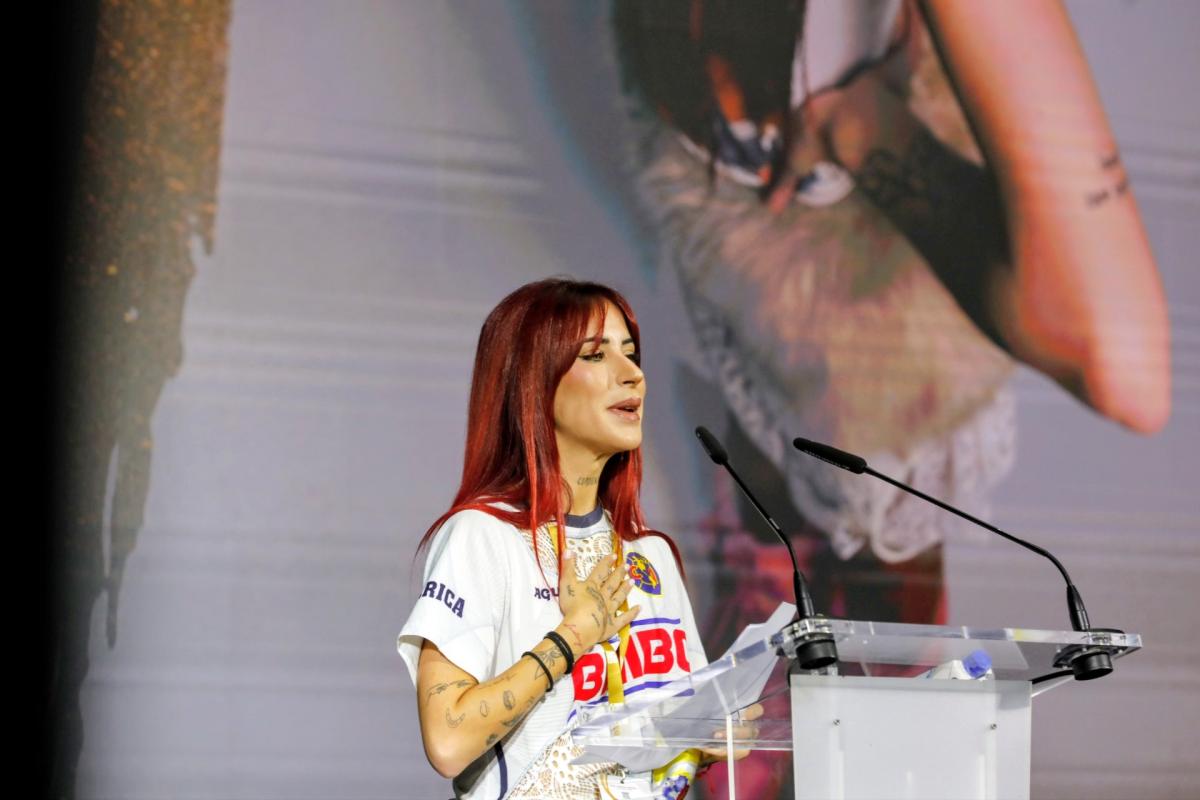
Below is the full text of the speech delivered by Spanish singer-songwriter and SGAE member Vicco at CISAC's 2026 Centenary General Assembly in Paris.
________
Good morning.
Thank you CISAC for inviting me to take part in this very special celebration.
It is a true privilege to be here representing the many authors who are part of this organisation, which has spent a century defending something essential for creators: the ability to make a living from our work.
Honestly, I have to admit that I’m a bit nervous.
Firstly, because I’ve been asked to speak immediately after someone I admire and who has been a true inspiration to me in the world of music creation: Björn, thank you for your words. Like everyone here, I grew up listening to your songs, and they’ve been the soundtrack of my life. Congratulations on your excellent speech, esteemed President.
I said earlier that it is a real honour being here, because whenever I step on stage, it is to perform, to play my music, to share my work and to try to make my audience happy. I’m often asked when I decided to pursue a career in music. The truth is I don’t remember making that decision.
Music came to me long before I realised I could make a career out of it.
From a very young age, around five years old, family car journeys became my first music school. My parents filled those hours on the road with songs by The Beatles, Supertramp, The Rolling Stones, The Who, Mecano, ABBA, Mariah Carey, Whitney Houston, Alicia Keys and many other artists who, years later, would continue to form part of my creative influences. Without realising it, I developed a wide-ranging musical ear, encompassing pop, rock, great voices and songs capable of transcending generations.
At the age of nine, I asked for a piano for Christmas. It was the gift that changed my life.
Since then, the piano has become my greatest musical ally, the tool that enabled me to learn to perform, to understand harmony and, above all, to compose. Many of the ideas I’ve had throughout my career were born whilst sitting at the keyboard.
The piano was where I began to discover who I was as an artist.
Over the years, I continued to develop my skills, writing songs and exploring different ways of expressing myself. Music was never just a passing hobby; it was the language through which I understood the world and understood myself.
In 2016, I made one of the most important decisions of my career: to learn how to produce my own music. I wanted to have creative control over my songs and to be able to transform the ideas in my head into a sound. Learning production gave me independence, but also something far more valuable: my own artistic identity. Understanding how to build a song from scratch, how to choose each sound and how to develop a personal sonic universe allowed me to find a voice that truly represented me.
For years I worked in silence, composing, producing, learning and searching for my place. I experienced the less visible side of this profession: the uncertainty, the projects that didn’t come to fruition, the songs that remained shelved and the constant feeling of preparing for an opportunity that hadn’t yet arrived.
That path changed when I found a way to express myself that didn’t try to be like anyone else. I realised that my strength lay in combining my pop sensibility with a very distinct creative personality: colourful, emotional, nostalgic, fun and deeply honest.
The arrival of “Nochentera” marked a turning point. The song connected with millions of people and allowed me to make a name for myself on a large scale, but it also presented me with a major challenge: to prove that behind the hit was an artist with a career, a vision and an identity built up over many years of work.
Since then, my aim has been to continue building a coherent artistic universe, where every song, every music video and every project forms part of the same story. A story that speaks of real emotions, of nostalgia as a creative driving force, of freedom, of fun and of the constant search for who we are when we stop trying to fit in with other people’s expectations.
Today, I still see music the way I did ass a child, listening to songs from the back seat of a car: as a way of transforming emotions, memories and stories into something that can connect with other people. The difference is that now I have a bigger platform. But the motivation remains exactly the same: to create songs that make people feel something and to build a world of my own where people want to stay for a while.
That is the greatest privilege of this profession. And also the reason why we are here today: because songs are not simply content. They are human experiences.
And that is precisely why we are living in such an important moment for creativity.
My generation came of age believing that the internet would democratise music. And in part, it has. Today, creators have a global audience thanks to social media and streaming platforms, which were unimaginable decades ago.
But at the same time, the challenges are enormous: in practice, we spend a great deal of time and energy trying to reach our audience so they’ll listen to our songs: the competition is fierce and visibility is a scarce resource.
Now we depend on algorithms. And even when we manage to get a song played many times on a platform, those hundreds of thousands, or even millions of plays, translate into minimal streaming revenue.
Before, 20–30 years ago, a creator could devote themselves to composing and make a living from their royalties.
Now we have become multi-tasking professionals, and making a living from music is becoming increasingly difficult due to the fierce competition on digital platforms. The emergence of generative Artificial Intelligence has also, significantly heightened the sense of insecurity and precariousness.
Generative AI models use our works without permission. Additionally,, they drive us out of the market by generating content in seconds that we cannot compete with. They use our works without authorisation to create content designed to replace us.
But let’s not fool ourselves: the current debate is not about being for or against artificial intelligence. In fact, many creators use AI to enrich our creative work. That is not the issue.
The issue is deciding what place we want to reserve for human creativity in the future. Because if we allow the works of millions of creators to be used without authorisation, without transparency and without remuneration to feed commercial AI systems, we will be putting at risk the creative ecosystem that makes it possible for new songs, new films, new books and new stories to exist.
And perhaps the most important question is not how many rights we stand to lose. It is how many songs will never be written because future songwriters and authors decide to turn to other things to make ends meet; because those royalties we fail to receive translate into lower wages. We authors support innovation; it is part of our creative process. But innovation also need rules. It needs transparency. It needs consent. Technological progress must move forward whilst respecting those who make culture possible.
In this context, belonging to SGAE, my rights managing and collecting society, means a great deal to me. It means knowing that I am not alone, that there is an organisation that protects my rights, ensures my works are recognised, and helps us creators to be fairly remunerated for our work. It also means being part of something much bigger: an international community of authors who share the same conviction that human creativity has value and deserves to be protected.
That is why I wish to extend my gratitude to every society represented here today for their work. And to CISAC itself, for a century of defending creators, culture, emotion and the stories we tell.
For that reason, the existence of an organisation like CISAC, comprising of more than 225 authors’ societies from around the world, is something we must undoubtedly celebrate.
I would like to take this opportunity on this very special stage to congratulate everyone present on behalf of my organisation, SGAE, and the more than five million creators whose voices I have had the privilege of representing today.
Thank you very much.