CISAC Vice-President Ángeles González-Sinde urges UNESCO to put creators at the heart of AI policy in keynote address
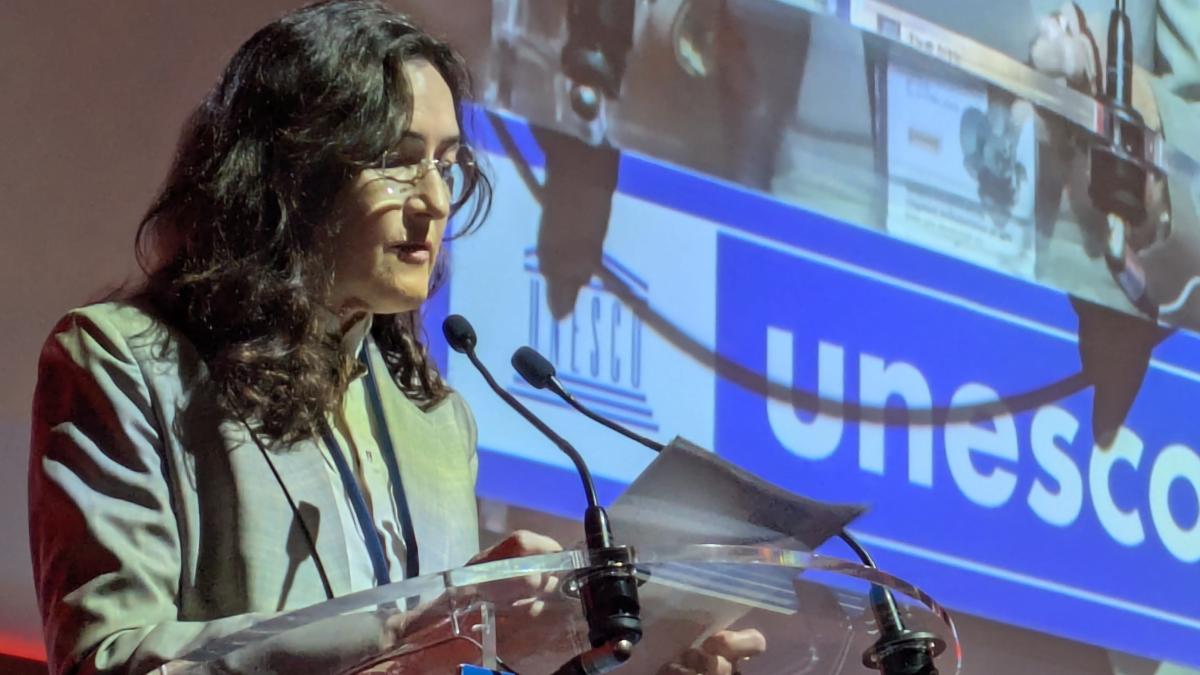
CISAC Vice-President Ángeles González-Sinde has called on UNESCO to give creators a central role in shaping the rules for artificial intelligence, warning that decisions being made today will determine whose stories, languages and cultural traditions reach future generations.
Delivering a keynote at UNESCO’s International Congress on Promoting Human Creativity and the Diversity of Cultural Expressions in the Digital Environment at their Paris headquarters on Tuesday morning, González-Sinde highlighted the growing pressures AI places on creators’ livelihoods and on the diversity of culture itself.
Speaking as a screenwriter, film director, former Spanish Minister of Culture and representative of CISAC’s global community of more than five million creators, she argued that protecting human creativity requires both enforceable rights and a commitment to sustaining voices that commercial markets and digital platforms can overlook.
“We have to live with AI, not under it,” said González-Sinde.“Consent is not a question of how much. It is a question of yes or no. Consent is the right to say no. If we cannot say no, we do not consent.”
González-Sinde set out three priorities for UNESCO: ensure creators from all backgrounds participate directly in AI policymaking; bring together authors’ societies, governments and international bodies to develop shared ways to identify works used by AI systems; and make the impact on cultural diversity a central consideration in how those systems are assessed.
Her intervention comes as generative AI changes how creative works are produced, distributed and discovered. For creators worldwide, these changes affect their ability to earn a living, control the use of their work and find an audience. For the public, they also raise a question about the future of cultural choice: whether digital systems will open doors to a wider range of human expression or reinforce what is already most visible and commercially successful.
González-Sinde drew particular attention to the vulnerability of minority languages, local traditions and emerging creators. Systems that learn from, recommend or reproduce what is already prominent risk further marginalising work with a smaller digital footprint, weakening the cultural foundations on which new creativity depends.
The economic stakes are substantial. A global study conducted by PMP Strategy and commissioned by CISAC in 2024 estimated that, under an unchanged regulatory framework, 24% of music creators’ revenues and 21% of audiovisual creators’ revenues could be at risk by 2028, with cumulative losses of €22 billion over five years.
While recognising the creative possibilities of AI, González-Sinde stressed that its development must respect consent, transparency and fair remuneration. Creators need a meaningful choice over whether their works are used, information that enables them to exercise their rights, and licensing arrangements that allow them to share in the value their work generates.
The UNESCO congress brought artists, international experts, public institutions, businesses and civil society into a discussion intended to inform UNESCO’s future action. González-Sinde’s address placed creators’ experience directly within that process, calling for international cooperation to turn principles into practical protections across borders.
Her message also builds on the Paris Commitment adopted during CISAC’s centenary year: that technological progress should strengthen creative value and sustain a cultural future shaped by human creators, local stories, languages and traditions.