Remuneration Rights are key to the sustainability of screenwriters and directors
The study, The Economic Importance of the Remuneration Right in the Spanish Audiovisual Market, is a comprehensive analysis of the economic and cultural impact of the right in Spain. It was presented by Know Media in collaboration with the Chair of Applied Economics at the University of Salamanca.
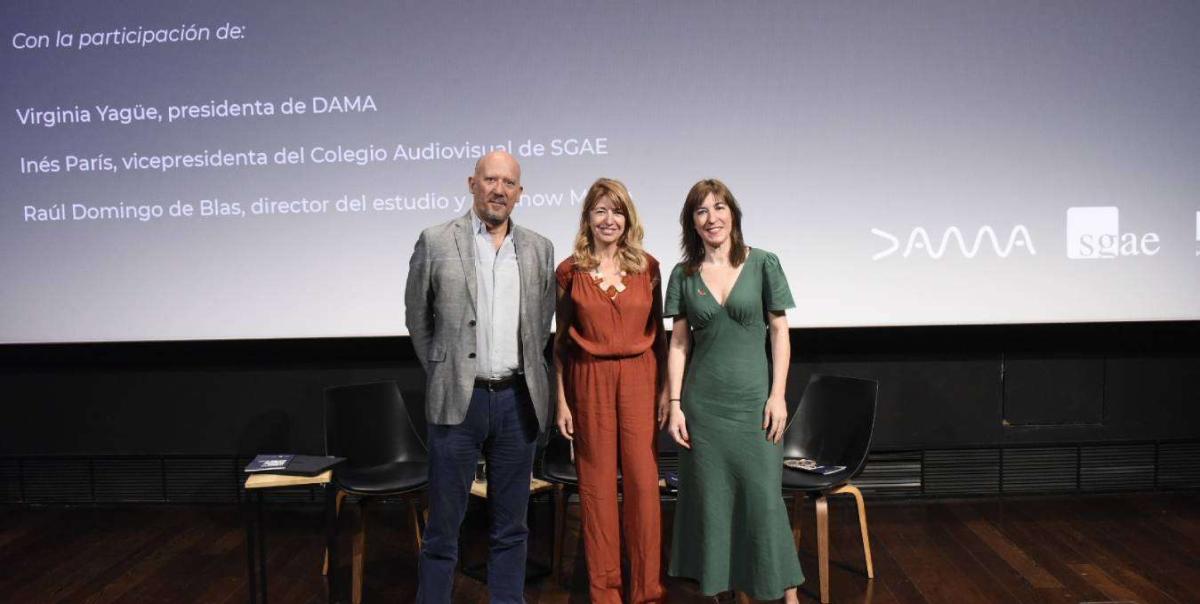
The report, unveiled today by DAMA and SGAE at the Spanish Film Academy, demonstrates that the remuneration right has become an essential element in ensuring the creative sustainability of audiovisual authors in Spain, strengthening their economic stability while complementing earnings and retirement income.
An essential support in an inherently unstable market
The study shows a sector characterised by irregular employment patterns and intermittent income streams, in which the remuneration right serves as a significant source of financial stability. According to the findings, this system accounts for approximately 13% of audiovisual creators’ total income and benefits around 60% of the professional community.
Based on a sample of 685 authors, the report estimates that remuneration rights generate, on average, more than €60,000 over the course of a professional career—rising to as much as €115,000 in future value terms—making a substantial contribution to the sector’s economic sustainability. The average annual income of audiovisual authors stands at €38,964. Within this context, one in five creators derives more than 20% of their annual income from remuneration rights.
A Driver of Creation and Cultural Diversity
In addition to its economic analysis, the report highlights the role of remuneration rights as a direct incentive for audiovisual creation. The system contributes to the production of approximately 800 new works each year. This not only increases the overall volume of production but also enriches the audiovisual ecosystem, fostering greater diversity of content and broader engagement with audiences.
The study also shows the positive the impact of remuneration rights extending well beyond the financial dimension, contributing to a important continuity effect within the audiovisual industry. Annual payments to creators under the right exceed €5,000, providing crucial support during periods of inactivity or intermittent employment. — This helps offset the inherent instability of the creative profession, encouraging professionals, who would otherwise abandon their career, to remain active within the sector.
The support of the remunerations right is especially significant for women, for whom such income may serve as a stabiliser during periods of career interruption.
The importance of remuneration rights extends beyond active professional life and plays an essential role during retirement: four out of ten authors consider this income crucial to achieving a dignified standard of living in later life.
A Support Network Throughout the Professional Career
Remuneration rights also underpin a support network for creators, managed by collective management organisations, that extends beyond direct income. In recent years, the system facilitated over 5,300 welfare grants and assistance measures. These allocate more than €3 million for direct support and nearly €6 million in investment in training and promotional programmes.
Especially important for young creators, the system helps meet a range of needs, from healthcare support and emergency aid to professional development programmes, creative residencies, mentoring schemes, screenwriting awards, specialised workshops, industry networking events, and internationalisation support through participation in markets and festivals.
The study shows an overwhelming concern among creators for continued support from the remuneration rights. Eight out of ten new emerging authors believe that the disappearance of the rights would make it more difficult for new professionals to enter the sector. The study estimates that a repeal of the rights would reduce the entry of new authors by as much as 67%.
Overall the study’s findings demonstrate that remuneration rights both protect established creators and estimulate generational renewal, creative diversity, and the long-term sustainability of the Spanish audiovisual ecosystem.
Remuneration rights are essential a thriving future
As well as showing the multiple positive effects of the right, the new report also warns of the consequences that if the system were eliminated. According to the survey results, 50% of authors would seriously consider leaving the profession if the rights were abolished. Younger professionals would feel the impact especially severely. Some two thirds (67%) of emerging authors express serious concern about the deterioration of their working conditions should these rights be lost. A similar proportion foresee a dramatic reduction in the entry of new talent into the profession.
Overall, the study highlights the risk of lost talent, reduced diversity and creative capacity, and contraction of audiovisual production in Spain if the right were to be removed.
The report concludes that remuneration rights, administered through collective management organisations, constitute a structural pillar of the Spanish audiovisual sector. They not only guarantee recurring income and economic stability for creators but also stimulate the creation of new works, support professional continuity throughout an author’s career, and help ensure the possibility of a dignified retirement.
Download the full study in Spanish. An English version will be available next week.