Different Markets, Shared Challenges: audiovisual creators call for fair remuneration at Cannes
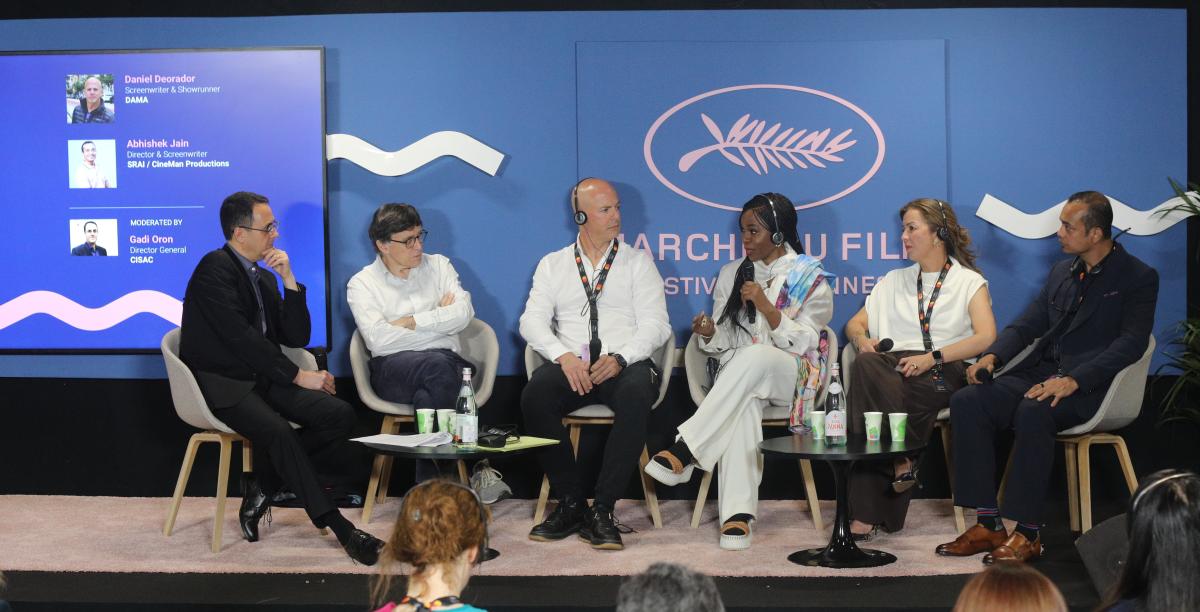
At the 2026 Festival de Cannes, CISAC brought together audiovisual creators and collective management leaders from Africa, Asia, Latin America and Europe to examine the challenges shaping creative careers today; from fair remuneration to creators’ rights, bargaining power, and the growing impact of streaming platforms and artificial intelligence.
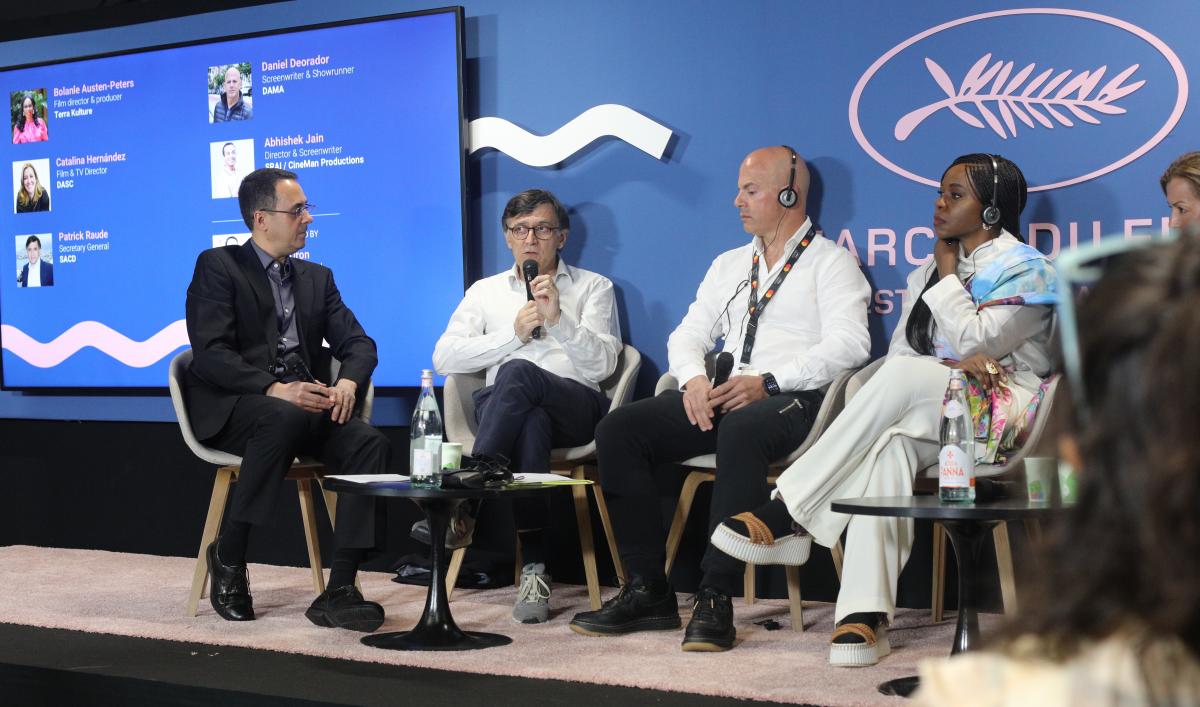
The panel, Different Markets, Shared Challenges: Fair Remuneration for AV Authors, featured Colombian director Catalina Hernández, Indian screenwriter and director Abhishek Jain, Nigerian Director and producer Bolanle Austen-Peters, Spanish screenwriter Daniel Deorador, and SACD Secretary General Patrick Raude. CISAC Director General Gadi Oron moderated the discussion.
Watch the full panel discussion.
Survival mode in high-output markets
The success of audiovisual production in countries such as India and Nigeria has not translated into greater economic security for many of the creators behind the work. Despite the scale and global reach of their industries, creators often operate without meaningful protection or sustainable remuneration structures.
In Nigeria, the absence of long-term remuneration frequently pushes creators into constant production simply to survive financially. In India, creators often hesitate to assert their rights for fear of losing future work opportunities. Although Indian law formally protects authors' rights, enforcement remains weak and creators regularly sign away their rights under pressure from producers and platforms.
Why remuneration rights and collective management matter
If creators struggle to share in the long-term value of their work, remuneration rights and collective management offer one way to address that imbalance.
Spain's unwaivable right to remuneration plays a critical role in sustaining creative careers, allowing creators to continue benefiting from the success of their works beyond initial fees. In Colombia, the Pepe Sánchez Law introduced remuneration rights for creators and strengthened the country's audiovisual collective management framework.
Collective management also helps creators negotiate in markets increasingly dominated by powerful global players. As Patrick Raude noted, “If you are alone, you are quite weak in negotiation.”
AI and the future of creation
Questions about value and remuneration also shaped the discussion around artificial intelligence.
CISAC's economic study on the impact of AI on the music and audiovisual sectors projects that audiovisual creators could lose 21% of their revenues to AI by 2028. Speakers warned that generative AI risks deepening an existing imbalance, allowing creative works to generate value without guaranteeing transparency, consent or remuneration for the creators behind them.
The concern is not innovation itself, but the use of copyrighted works without transparency, consent or remuneration. Policymakers in France and across Europe are now grappling with how to ensure creators remain visible, protected and fairly paid in an AI-driven market.
A shared challenge
Whether the pressure comes from buyout contracts, weak bargaining power or artificial intelligence, creators continue to generate value that others are often better positioned to capture.
Reaffirming CISAC's position, Gadi Oron stressed the need to protect and fairly remunerate human creativity.
“We need to make sure that human creativity is protected and remunerated so that creators can continue to enrich all of our lives with their creations,” he said.