CISAC President Björn Ulvaeus calls for strong creator protections as Canada hosts AI and Culture summit
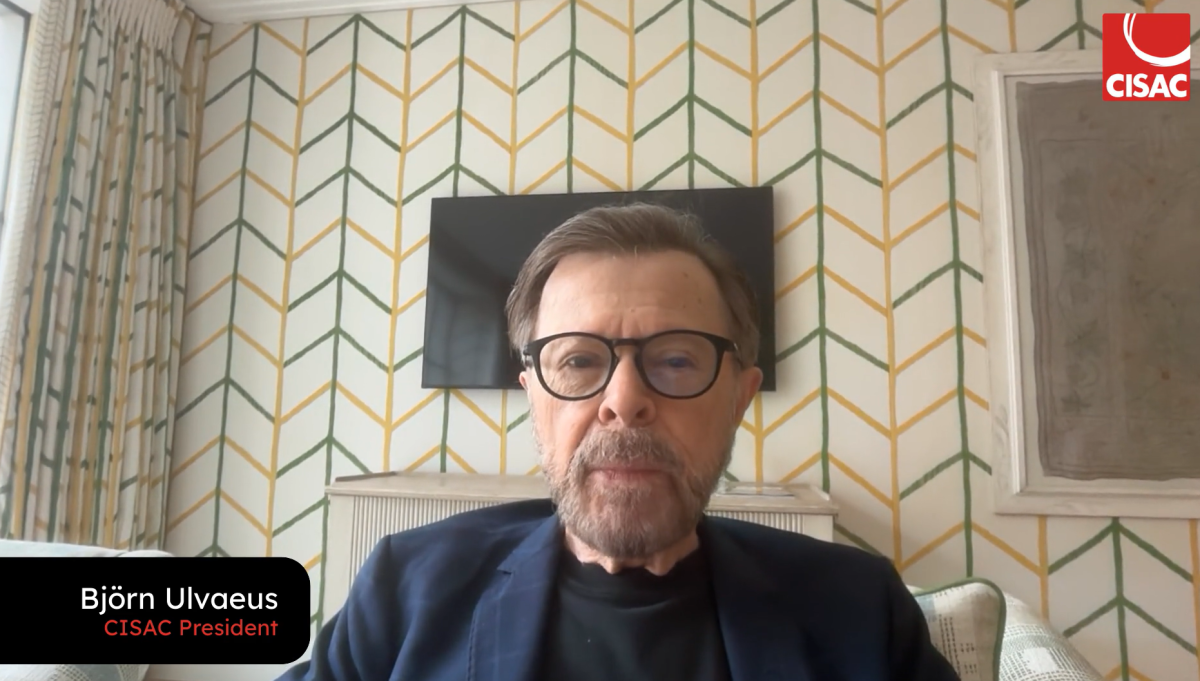
In a recorded opening keynote speech for Canada’s National Summit on Artificial Intelligence and Culture, CISAC President and ABBA singer-songwriter Björn Ulvaeus urged Canadian policymakers to ensure that the rapid development of artificial intelligence strengthens, rather than undermines, the rights of creators.
The two-day summit took place on 16-17 March and was hosted by the Banff Centre for Arts and Creativity and the Government of Canada. Leaders from the cultural sector, government, technology, academia and civil society examined how AI is reshaping Canada’s creative industries and what policy frameworks are needed to manage the potential negative impacts of AI technology.
In his address, Ulvaeus spoke from his own experience as a songwriter warning that while many creators are already exploring the creative potential of AI, the technology must not be built on the uncompensated use of human creativity. AI systems are increasingly trained on vast datasets of creative works, often without the knowledge or payment of the creators whose work underpins them. Without strong protections, he said, we risk undermining the livelihoods of the millions of creators who depend on royalties to sustain their careers.
Ulvaeus outlined three key principles that should guide AI regulation: transparency about the works used to train AI systems, the ability for creators to license their works, and guaranteed remuneration when those works are used.
“The choices made in legislation and regulation today will shape how human creativity is valued in the age of machines,” Ulvaeus said. “Canada has the opportunity to build a framework grounded in fairness, partnership and respect for creative work.”
Watch Björn Ulvaeus’ full address or download the transcript.
At the same time, CISAC’s Canadian member society SOCAN, representing more than 185,000 songwriters, composers and music publishers, has stepped up its advocacy to ensure creators’ voices are heard as AI policy discussions in the country intensify. The societies’ national campaign, “Say No to AI Training on Unlicensed Music,” has already garnered more than 6,000 creators’ signatures.
The campaign urges the Government of Canada to rule out any copyright exceptions that would permit the unauthorised use of protected works for AI training, while calling for transparency from AI companies, clear labelling of AI-generated outputs and policies that safeguard Canada’s cultural sovereignty.